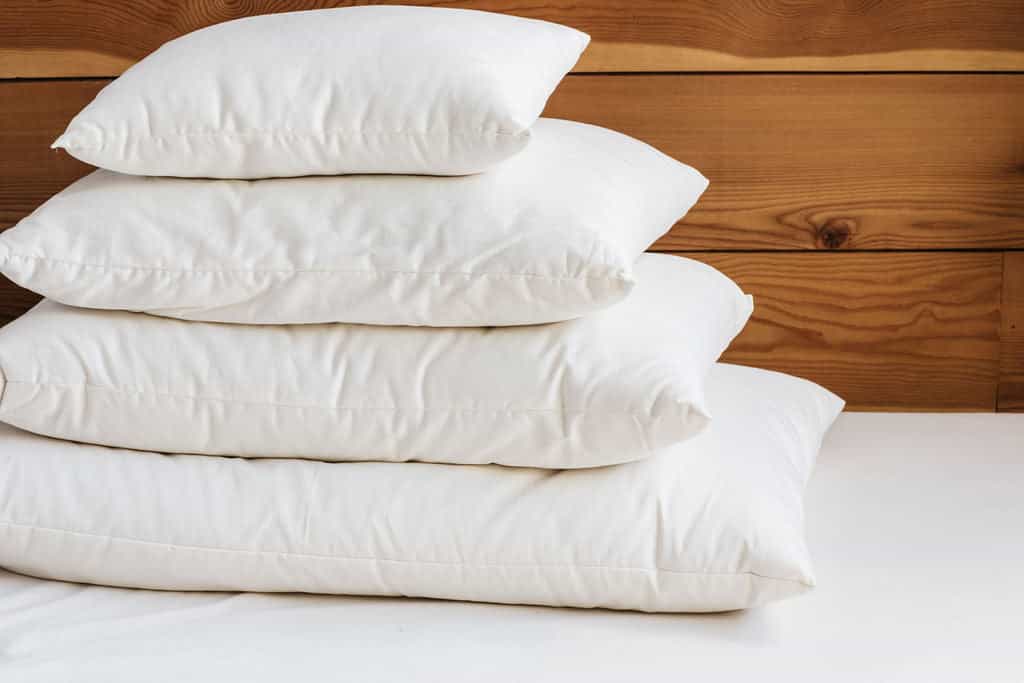
The considered bedroom
How Wool-Filled Pillows Differ from Latex: Comfort, Care, and Materials
A pillow is a small detail with an outsized influence on the feel of a night’s rest. Wool and latex can both offer enduring support, yet they create distinctly different experiences: one softly cushioned and breathable, the other springy, responsive, and more closely conforming. Understanding the filling, construction, loft, and care behind each option makes the choice less about labels and more about what feels right to you.
In the language of bedding, “natural” can describe materials that behave in very different ways. Wool is a familiar animal fibre, often layered or packed into a pillow to create a resilient, softly yielding feel. Latex is a responsive material derived from rubber-tree sap, shaped into a supportive core or shredded pieces. It tends to push back against pressure rather than settle in quite the same way as fibre filling.
Neither material is a universal answer to better sleep. A pillow that feels sumptuous to one person may feel too lofty, firm, or warm to another. Sleeping position, shoulder width, mattress firmness, preferred temperature, and sensitivity to texture all influence the experience. The best comparison begins with the pillow’s construction—not a broad promise attached to its material name.
The essential difference: fibre versus spring
Wool-filled pillows are made with wool fibres, which may be arranged as batting or used as a loose, compact filling. The result is usually a gentle, cushioned surface with a degree of resilience. Wool can compress under the head and recover its shape, although the amount of loft and firmness depends on the quantity of filling, how it is prepared, and whether the pillow can be opened for adjustment.
Latex pillows use a different kind of support. A solid latex core has a more uniform profile, while shredded latex is made from smaller pieces that can move within the pillow. Both forms are known for a springy response: they compress beneath the head, then press back as weight shifts. Shredded latex may feel more flexible than a single-piece core, but it is not automatically adjustable. Check the product details before assuming the filling can be added to or removed.
That distinction shapes the sensation. Wool often feels like a softly upholstered surface, with a more gradual give. Latex is generally more buoyant and lively, with support that can feel immediate. These are tendencies, not guarantees: fill volume, cover fabric, pillow dimensions, and manufacturing choices can make two pillows in the same material category feel quite unlike one another.
How wool feels beneath the head
Wool has an understated, comforting character. It is a natural fibre with a springy structure, and a wool pillow can feel plush without being feather-light. Many sleepers appreciate the way it cushions the head while maintaining a sense of substance. Others may find a densely filled wool pillow firmer or heavier than expected, particularly if they are used to a soft down-style pillow.
Wool’s response is less sharply elastic than latex. Rather than giving a distinct spring-back sensation, it tends to compress and settle, then regain some loft over time. The exact feel depends on the fill and construction. A layered batting pillow may offer a more even surface; a pillow with loose or removable wool pieces may allow a more personal arrangement, if its design permits adjustments.
Wool is also valued for managing moisture and helping moderate temperature. This does not mean every wool pillow will feel cool to every sleeper, or that it can regulate body temperature in a medical sense. Room conditions, pillowcase fabric, duvet weight, and personal comfort all matter. For people who dislike the slick, close feel of some synthetic materials, wool’s dry, fibrous character can be appealing.
One practical note: wool may have a mild natural scent when new. This can vary by source and processing and may fade with airing. A removable pillowcase or protector can keep the surface fresh while letting the pillow itself remain less frequently handled.
The responsive character of latex
Latex is often chosen for its buoyant support. Instead of slowly conforming and staying compressed, it tends to respond quickly as pressure changes. For sleepers who move during the night, that lively quality can feel easy to reposition on. A latex pillow may also maintain a more consistent shape than a loose fibre pillow, although its performance depends on the specific design and how it is used.
Shredded latex can create a softer, more adaptable surface than a solid latex piece because the small sections shift around one another. Some designs allow the filling to be adjusted; others do not. A product’s description should make this clear. For example, the Organic Shredded Latex Pillow is described as having shredded Dunlop latex in an organic cotton cover. Its listing notes that the fill can be removed to wash the encasement, but that should not be mistaken for a promise that the pillow’s loft is adjustable.
Latex can feel firmer and more buoyant than wool, yet the word “firm” alone is not a reliable predictor. A high-loft shredded pillow may feel substantial; a lower-profile model may feel gentler. The shape of the pillow and the way its filling is distributed are just as important as the material. If possible, consider the dimensions and construction alongside the stated filling rather than choosing by material name alone.
Loft, sleep position, and the shape of support
Loft—the height of a pillow when it is supporting the head—helps determine whether the neck feels comfortably aligned. A pillow that is too high or too low for someone’s body and mattress may feel awkward regardless of whether it is made with wool or latex. Side sleepers often look for enough height to fill the space between the head and shoulder; back sleepers may prefer a moderate profile. Stomach sleepers commonly find that a lower, softer pillow feels less cumbersome, though individual comfort varies.
These are useful starting points, not rules. A wider shoulder, a softer mattress that lets the body sink farther, or a personal preference for a more enveloping feel can change what works. Wool pillows may compress more under sustained weight, which can alter the effective height during the night. Latex often has a more noticeable spring-back, so its support may feel more present as the head changes position.
Before choosing, consider how the pillow behaves when you lie on it—not just how tall it appears on a shop shelf. If you can try it, spend time in your usual sleep position. If you cannot, look for clear information about dimensions, fill weight, construction, and any return or exchange terms. A pillowcase can also affect the surface sensation, but it will not transform a high pillow into a low one.
Wool options vary from straightforward, fixed-fill designs to versions with a zippered shell. The All-Natural Wool-Filled Bed Pillow, for instance, is described as a wool-filled pillow with a zippered organic cotton shell, and the provided care information recommends spot cleaning. A zippered shell is not in itself evidence that the fill is meant to be adjusted, so check the individual product instructions before opening or changing the filling.
Breathability and temperature comfort
Material can influence how a pillow feels over several hours, particularly in a warm room or under substantial bedding. Wool is often appreciated for its ability to manage moisture and for its naturally airy, fibrous structure. Latex is commonly described as resilient and supportive; the sensation of warmth can depend on whether it is solid or shredded, how the pillow is constructed, the cover fabric, and the sleeper’s own temperature preferences.
It is worth being precise about claims. No pillow material guarantees that a person will sleep cool, stay dry, or avoid night sweats. Bedroom ventilation, humidity, duvet insulation, sleepwear, and individual physiology all contribute. Think of the filling as one element in a layered sleep environment rather than a standalone climate-control solution.
Cover materials matter, too. Organic cotton sateen, cotton knit, and other fabrics each have their own hand and airflow characteristics. A close-weave cover may feel smooth, while a more textured fabric can feel slightly different against the skin. A washable outer case or a protective pillow cover can be useful if you want to keep the inner pillow cleaner without laundering the filling itself.
Care: why the washing instructions matter
Care is one of the clearest practical differences between wool and latex pillows—and also an area where product-specific instructions matter most. Many wool-filled pillows are spot-clean only. Wool filling can be sensitive to vigorous washing, and soaking or machine washing a complete pillow may distort the filling or make drying difficult. If the pillow has a separate case, that case may have different instructions from the inner pillow.
For a spot-clean-only wool pillow, act gently. Blot a small spill rather than rubbing it deeper into the fabric, use only the cleaning method recommended by the maker, and allow the pillow to dry fully before putting it back on the bed. Airing the pillow in a dry, well-ventilated place can help refresh it. Direct heat, prolonged dampness, or strong sunlight may be unsuitable, so follow the label rather than relying on a general rule.
Latex pillows also generally call for careful handling. Some have a removable cover or encasement that can be washed separately, while the latex filling itself should be spot-cleaned or protected from water. The Organic Shredded Latex Pillow’s care notes, for example, specify spot cleaning the pillow and washing the encasement separately in cold water, followed by line drying or low tumble drying. These directions are specific to that product; another latex pillow may have different instructions.
In either case, a pillow protector can reduce contact with perspiration, skin oils, and everyday dust. Use a protector that fits without compressing the pillow into an uncomfortable shape, and wash it according to its own care label. A regular pillowcase remains useful, but it is not a substitute for following the manufacturer’s cleaning guidance.
Materials and certifications: reading beyond the headline
“Wool pillow” and “latex pillow” describe the filling, not necessarily the entire product. Look at the shell, any added layers, stitching, zips, and the source of the materials. A wool pillow may pair wool with an organic cotton cover. A latex pillow may use a cotton encasement around shredded latex. Those details can affect feel, care, durability, and how well the materials align with your priorities.
Certifications can help clarify what has been assessed, but they are not interchangeable. GOTS, for example, relates to organic textile processing and product criteria; GOLS applies to organic latex. The precise certification on offer depends on the product and supply chain. Read what a certification covers rather than treating a general “organic” description as a complete account of every component or manufacturing step.
For wool, useful questions include whether the filling is organic or described as eco wool, where it is sourced, whether the pillow is handmade, and whether the supplier explains how the wool is processed. For latex, look for the type of latex, whether it is Dunlop or another form, whether it is solid or shredded, and what certification applies. Clear descriptions make comparison more meaningful than broad claims about purity or performance.
Which pillow may suit your preferences?
A wool-filled pillow may appeal if you prefer a softer, fibre-based feel, value natural materials, and are comfortable with spot-cleaning the inner pillow. It can be a considered choice for someone who likes a gently cushioned surface and wants a pillow that feels less spring-loaded. Before buying, confirm the pillow’s height, firmness, cover construction, and whether the fill is fixed or adjustable.
A latex pillow may be a better fit if you enjoy a buoyant, responsive feel and want support that quickly rebounds as you shift position. Shredded latex can feel less uniform than a solid core, though the precise sensation depends on the amount and distribution of filling. Confirm whether the loft can actually be adjusted, and check whether the cover can be removed for washing.
For allergy or health concerns, do not assume that “natural,” “organic,” or “hypoallergenic” means a product is suitable for every individual. Sensitivities vary, and people can react to different fibres, proteins, dust, or other factors. If you have a known allergy or a medical concern, consult an appropriate health professional and review the product’s complete material information before making a decision.
A simple comparison before you decide
- Feel: Wool often has a softly cushioned, fibrous character; latex tends to feel springier and more responsive.
- Loft: Both vary by design. Check measurements and fill details, and do not assume a zippered case means adjustable filling.
- Temperature: Wool is valued for moisture management; overall comfort also depends on the cover, room, bedding, and individual preference.
- Cleaning: Wool pillows are commonly spot-cleaned. Latex filling often requires careful cleaning, while a removable cover may be washable separately.
- Materials: Check the shell, fill, sourcing details, and the scope of any certification, not just the headline material.
- Longevity: Protect the pillow with a suitable case, follow care instructions, and replace it when its support or condition no longer suits you.
The final measure is personal comfort
Wool and latex are not rivals so much as two distinct approaches to comfort. Wool offers a more softly buffered sensation, with natural fibre filling and a care routine that is usually gentle and restrained. Latex brings a lively, resilient response and may feel more immediately supportive beneath a shifting head. Each can be thoughtfully made; each can also disappoint if the loft, shape, or upkeep does not match your habits.
Start with the practical questions: What position do you sleep in most often? Do you prefer to sink slightly into a pillow or feel it push back? Is a spot-clean-only design workable for your household? Would you rather have a uniform shape, or do you want a filling that can be adjusted if the product specifically allows it? These answers will narrow the field more effectively than a promise of perfect sleep.
Then look closely at construction and care. A pillow is an intimate, hard-working part of the bed, and the most elegant choice is often the one that fits your routine as naturally as it fits your sleep style. When the materials, support, and maintenance all make sense together, comfort becomes less of a marketing idea and more of an everyday, well-considered pleasure.